

The Ultimate Vendor Due Diligence Checklist: 10 Key Areas for 2025

In today's interconnected business ecosystem, your vendors are an extension of your organization. A weak link in your supply chain can expose you to catastrophic financial, legal, and reputational damage. Simply trusting a vendor's sales pitch or a confident handshake is no longer a viable strategy; it's a significant business risk. A systematic, evidence-based approach to vetting potential partners is essential for resilience, compliance, and sustained growth.
This guide provides a comprehensive vendor due diligence checklist, moving far beyond surface-level inquiries. We will break down the vetting process into 10 critical assessment domains, equipping you with the tools to build a secure, compliant, and high-performing network of third-party partners. You will learn not just what to check, but how to verify the information you receive.
Inside, you will find actionable steps, specific questions to ask, and practical verification methods for each checklist item, covering everything from financial health to cybersecurity posture. We will also explore advanced techniques, such as using an AI Image Detector to validate vendor-supplied documentation and identify synthetic media, ensuring the integrity of your due diligence process. This checklist is designed to be a practical resource for anyone involved in procurement, risk management, or compliance, providing the clarity needed to make informed and defensible partnership decisions.
1. Financial Health and Creditworthiness Assessment
Evaluating a vendor's financial stability is a foundational step in any robust vendor due diligence checklist. This assessment dives deep into a company's financial records to determine if it has the resources and stability to meet its contractual commitments over the long term. A financially unstable vendor can introduce significant risks, including service disruptions, sudden termination of business, or a decline in quality as they cut corners to stay afloat.

Key Actions and Verification Methods
To conduct a thorough assessment, focus on gathering and analyzing specific financial documents. Start by requesting the last three years of audited financial statements, including the balance sheet, income statement, and cash flow statement. To thoroughly evaluate a vendor's financial standing, consider insights from comprehensive financial due diligence processes. These documents provide a historical view of performance and operational efficiency.
Next, supplement this data with third-party verification:
- Credit Reports: Obtain a business credit report from agencies like Dun & Bradstreet (D&B) or Experian. These reports provide a credit score, payment history, and public records of liens or judgments.
- Industry Benchmarking: Compare the vendor's key financial ratios (e.g., debt-to-equity, current ratio) against industry averages to see how they stack up against competitors.
- Customer and Supplier References: Inquire about their payment history and financial reliability from their key business partners.
Practical Implementation Example
A global automotive manufacturer like Toyota implements a rigorous supplier financial assessment program. Before awarding a contract for a critical component, they analyze the supplier's cash flow, debt load, and profitability trends. They set minimum thresholds for liquidity ratios and require suppliers to submit quarterly financial updates. This proactive approach ensures their supply chain remains resilient and avoids disruptions caused by a supplier's financial failure, a critical component of their just-in-time manufacturing model. This meticulous process helps them anticipate potential issues and maintain business continuity.
2. Legal Compliance and Regulatory Requirements
Ensuring a potential vendor adheres to all relevant laws and industry regulations is a critical part of any vendor due diligence checklist. This step involves verifying that the vendor possesses the necessary licenses, permits, and certifications to operate legally and meets specific compliance standards pertinent to your industry. A non-compliant vendor can expose your organization to significant legal, financial, and reputational risks, including fines, litigation, and operational disruptions.
Key Actions and Verification Methods
A systematic approach is essential for verifying legal and regulatory compliance. Begin by creating a compliance matrix that lists all applicable regulations based on your industry, geography, and the nature of the service provided. For instance, a healthcare provider must verify a vendor's HIPAA compliance, while a financial services firm needs to confirm PCI-DSS certification for payment processors. Understanding the intersection of legal obligations is a core component of effective regulatory compliance risk management.
Next, gather evidence and perform direct verification:
- Request Documentation: Ask for copies of all relevant licenses, permits, and certifications. This includes business registrations, industry-specific accreditations, and attestations of compliance (e.g., SOC 2 report, ISO 27001 certificate).
- Independent Verification: Do not rely solely on vendor-provided documents. Cross-reference licenses and registrations with the issuing government or regulatory bodies' public databases.
- Legal History Review: Investigate any history of litigation, regulatory penalties, or enforcement actions against the vendor. Understanding a vendor's history with legal agreements can also provide insight into their reliability and potential for future disputes, clarifying the importance of understanding breach of contract remedies.
Practical Implementation Example
A multinational technology company operating in the European Union, like Siemens, rigorously vets its cloud service providers for GDPR compliance. Before engaging a new vendor, they require the completion of a detailed data processing questionnaire, a copy of the vendor's GDPR compliance certificate, and proof of designated Data Protection Officer (DPO) registration. They also include specific data protection clauses and right-to-audit provisions in the contract. This ensures that customer data is handled according to strict legal standards, mitigating the risk of multi-million-euro fines and preserving customer trust.
3. Operational Capacity and Performance Metrics
Beyond financial health, a vendor's operational capability is the engine that drives service delivery. This part of a vendor due diligence checklist assesses whether a potential partner has the infrastructure, processes, and resources to consistently meet quality standards, delivery timelines, and service level agreements (SLAs). A vendor with poor operational controls can cause significant downstream issues, including product defects, project delays, and reputational damage.
Key Actions and Verification Methods
To evaluate operational capacity, you must look beyond promises and examine historical performance and current capabilities. Start by requesting documentation that substantiates their operational track record, such as historical performance reports against SLAs for key clients. This provides concrete evidence of their ability to deliver as promised.
Next, validate their capacity and quality management systems:
- Performance Data: Ask for key performance indicators (KPIs) like on-time delivery rates, defect rates, customer satisfaction scores (CSAT), and mean time to resolution (MTTR) for service incidents.
- Site Visits and Audits: If feasible, conduct an on-site visit to tour their facilities. This firsthand look can reveal much about their production capabilities, quality control processes, and employee expertise.
- Certifications: Verify relevant quality management certifications, such as ISO 9001, or adherence to industry-specific standards like Lean Six Sigma, which demonstrate a commitment to operational excellence.
- Scalability Plans: Discuss their ability to scale operations up or down to meet your changing business needs, including their processes for adding staff, equipment, or resources.
Practical Implementation Example
Amazon's vendor management system provides a masterclass in operational performance tracking. Vendors on its platform are evaluated using a comprehensive scorecard that monitors metrics like on-time shipment rates, order defect rates, and inventory accuracy. If a vendor's performance dips below a certain threshold, automated systems can limit their visibility or even suspend their selling privileges. This rigorous, data-driven approach ensures that only operationally sound vendors serve Amazon’s customers, protecting the company's brand promise of speed and reliability.
4. Reputation and References Verification
A vendor's past performance is often the best predictor of future success, making reputation and reference checks a critical part of any vendor due diligence checklist. This stage moves beyond self-reported claims to uncover real-world experiences from those who have worked directly with the vendor. Assessing their market standing, customer satisfaction levels, and industry perception provides invaluable context that documents alone cannot.
Key Actions and Verification Methods
Begin by requesting a list of at least three to five current or former clients, preferably those in a similar industry or with a comparable scope of work to your own. However, don't stop with the vendor-provided list. Independent verification is key to getting an unbiased view.
Supplement the vendor's references with your own research:
- Independent Reference Checks: Use professional networks like LinkedIn to find contacts at companies listed as clients. Reaching out independently can yield more candid feedback than a pre-vetted reference.
- Industry Analyst Reports: Consult reports from firms like Gartner (e.g., Magic Quadrant) or Forrester. These provide expert, third-party assessments of a vendor’s market position and capabilities relative to competitors.
- Online and Media Search: Conduct thorough searches for news articles, press releases, online reviews, and social media sentiment. Look for both positive stories and any patterns of complaints, litigation, or negative press.
- Employee Reviews: Check platforms like Glassdoor. Employee satisfaction can be an indicator of a stable, well-run company, which often translates to better customer service and product quality.
Practical Implementation Example
Salesforce, a global leader in CRM, incorporates multi-layered reputation checks when vetting AppExchange partners. Beyond technical and security reviews, they require new partners to provide customer references who can attest to product functionality and support quality. They also monitor community forums and review sites for user-generated feedback on app performance and stability. This rigorous process protects their ecosystem's integrity and ensures that customers can trust the third-party applications they integrate, reinforcing the value of their platform.
5. Cybersecurity and Data Protection Posture
In an interconnected digital ecosystem, evaluating a vendor's cybersecurity and data protection capabilities is a non-negotiable part of any vendor due diligence checklist. This assessment scrutinizes a vendor's ability to safeguard sensitive information, defend against cyber threats, and respond to security incidents. A vendor with a weak security posture can become a direct conduit for data breaches, reputational damage, and significant regulatory fines, as highlighted by incidents like the SolarWinds supply chain attack.

Key Actions and Verification Methods
A comprehensive cybersecurity assessment relies on documentation, third-party attestations, and contractual controls. Begin by requesting formal security documentation that provides evidence of a mature security program. Organizations can gain deep insights into a vendor's security controls by reviewing their SOC 2 Type II audit reports, which detail operational effectiveness over a period.
Next, use standardized frameworks and direct verification to validate their claims:
- Security Questionnaires: Administer a detailed questionnaire based on established frameworks like the Cloud Security Alliance's Consensus Assessments Initiative Questionnaire (CAIQ) or NIST Cybersecurity Framework.
- Penetration Testing Reports: Request summaries of recent third-party penetration tests and evidence of how identified vulnerabilities were remediated.
- Certifications: Verify relevant certifications, such as ISO 27001 for information security management or PCI-DSS for vendors handling payment card data.
- Incident Response Plans: Review the vendor's incident response and data breach notification plans to ensure they align with your own policies and regulatory requirements.
Practical Implementation Example
A healthcare system preparing to partner with a new cloud-based electronic health record (EHR) provider makes security a central part of its due diligence. It mandates that the vendor provides a current SOC 2 Type II report and evidence of HIPAA Security Rule compliance. The healthcare system's security team also reviews the vendor's penetration testing results and data encryption policies for data both in transit and at rest. This rigorous process ensures that patient data remains secure and the organization stays compliant with healthcare regulations, mitigating the risk of a costly data breach.
6. Insurance Coverage and Liability Protection
Verifying a vendor's insurance coverage is a critical risk mitigation step in any vendor due diligence checklist. This process confirms that the vendor has sufficient financial protection to cover potential liabilities, damages, or business interruptions that could arise during your partnership. Inadequate insurance can leave your organization financially exposed to claims resulting from the vendor's errors, accidents, or negligence, turning a minor operational issue into a major financial crisis.
Key Actions and Verification Methods
A thorough review involves more than just accepting a piece of paper; it requires active verification and alignment with your specific risks. Begin by requesting the vendor's Certificate of Insurance (COI), which summarizes their active policies. The types of coverage to scrutinize will depend on the services provided but often include General Liability, Professional Liability (Errors & Omissions), Cyber Liability, and Workers' Compensation.
Next, take these verification steps to ensure the coverage is real and adequate:
- Direct Carrier Verification: Contact the insurance carrier listed on the COI to confirm the policy is active, the coverage limits are accurate, and no notices of cancellation have been issued.
- Review Policy Endorsements: Request to see specific endorsements, especially the one that names your company as an "additional insured." This provides you with direct protection under the vendor's policy.
- Establish Minimums: Define and communicate your minimum required coverage limits based on the contract's value and potential risk exposure.
- Cancellation Clause: Ensure the vendor's policy includes a clause requiring their insurer to provide you with at least 30 days' notice before any cancellation or material change.
Practical Implementation Example
A large-scale construction firm contracting a subcontractor for a high-rise project makes insurance verification a non-negotiable part of its onboarding process. They require a COI showing a minimum of $5 million in general liability and an "additional insured" endorsement before any work begins. Their risk management team then directly calls the insurance broker listed to verify the policy details. This rigorous process protects the firm from potential multimillion-dollar claims related to worksite accidents or property damage, ensuring that the financial risk is appropriately managed by the responsible party's insurer.
7. Ownership Structure and Conflict of Interest Assessment
Understanding a vendor's ownership and governance structure is a crucial element of a comprehensive vendor due diligence checklist. This assessment aims to identify potential conflicts of interest that could compromise the vendor's objectivity, loyalty, or independence. A hidden affiliation, a significant ownership stake in a competing firm, or opaque related-party transactions can introduce unacceptable risks, from biased recommendations to legal and reputational damage.
Key Actions and Verification Methods
To effectively assess ownership and potential conflicts, you must go beyond surface-level information. Start by requesting a detailed organizational chart that clearly outlines parent companies, subsidiaries, and key individual owners. This provides a map of the corporate ecosystem you are potentially entering.
Next, conduct targeted verification and disclosure activities:
- Background Checks: Perform thorough background checks on key executives and principal owners to uncover undisclosed business interests or past integrity issues.
- Conflict of Interest Disclosures: Require the vendor to complete and sign a conflict of interest disclosure form, certifying that no undisclosed relationships exist that could influence the business relationship.
- Public Record Searches: Use corporate registry databases and, for public companies, review SEC filings (like Form 10-K) to verify ownership information and identify reported related-party transactions.
- Contractual Clauses: Embed specific clauses in the vendor contract that require them to report any material changes in ownership or new potential conflicts of interest that arise during the engagement.
Practical Implementation Example
A large financial institution, when engaging a new FinTech provider for a wealth management platform, implements a stringent conflict of interest review. The institution requires the vendor to disclose any ownership stakes held by its executives in competing financial technology firms. They also use specialized due diligence services to search for any board memberships or advisory roles that could create divided loyalties. This process prevents a situation where a vendor might favor technology integrations or business strategies that benefit an affiliated company rather than the institution itself, ensuring impartial service delivery.
8. Supply Chain and Subcontractor Visibility
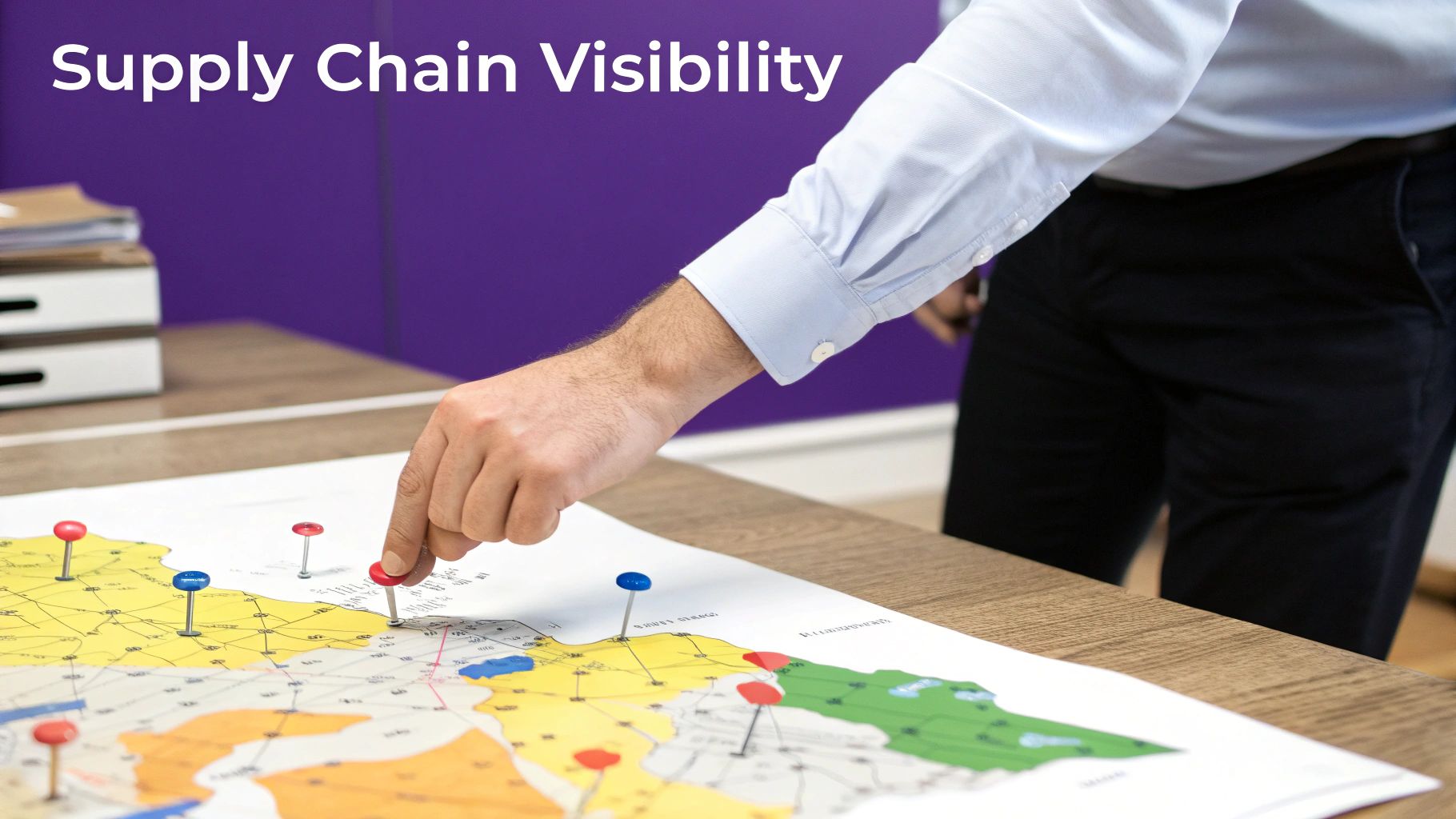
A vendor’s operations rarely exist in a vacuum; they rely on a network of their own suppliers, subcontractors, and service providers. True vendor due diligence extends beyond your direct contractor to assess this "fourth-party" risk. Evaluating a vendor's supply chain is crucial because vulnerabilities, ethical lapses, or operational failures from their partners can directly impact the service, product, or compliance you receive, creating a hidden layer of risk.
Key Actions and Verification Methods
To gain a clear view of your vendor’s extended network, begin by requesting a complete list of critical subcontractors and key suppliers involved in delivering the service or product you are procuring. This initial step is fundamental to any effective third-party risk management framework. Scrutinize this list to understand dependencies and potential points of failure.
Next, formalize your oversight with these verification methods:
- Contractual Clauses: Include clauses in your vendor contract that grant you the right to audit their key subcontractors. Also, require the vendor to notify you of any changes to their critical suppliers.
- Flow-Down Requirements: Ensure your vendor contractually obligates their subcontractors to adhere to the same security, compliance, and ethical standards you require of them.
- Geographic Risk Analysis: Map the locations of key subcontractors to identify any concentration risks, such as reliance on a single geographic region prone to natural disasters or political instability.
- Supplier Risk Scoring: Ask if the vendor has a formal program for scoring and monitoring their own suppliers' performance and risk levels.
Practical Implementation Example
The electronics industry provides a powerful example through its focus on conflict-free mineral sourcing. A company like Apple implements a stringent supplier responsibility program that goes deep into its supply chain. They not only audit their primary assembly partners but also investigate and audit the smelters and refiners (Tier 3 and 4 suppliers) that provide raw materials like tin, tungsten, and gold. This deep-level visibility ensures compliance with regulations like the Dodd-Frank Act and upholds their commitment to ethical sourcing, protecting their brand from significant reputational damage.
9. Intellectual Property Rights and Protections
When engaging a vendor, particularly in technology, creative, or manufacturing sectors, scrutinizing their approach to intellectual property (IP) is a critical part of a comprehensive vendor due diligence checklist. This evaluation ensures that the vendor respects IP rights, protects your proprietary information, and provides clear terms regarding the ownership of any work product created. Neglecting this step can lead to costly legal disputes, loss of competitive advantage, and infringement claims.
Key Actions and Verification Methods
A thorough IP assessment involves reviewing the vendor’s policies, agreements, and track record. Start by requesting and analyzing their standard licensing agreements, confidentiality clauses, and IP indemnification terms. This reveals how they handle ownership, usage rights, and liability for the intellectual property they provide or create.
Next, broaden your verification with these targeted actions:
- Review IP Ownership Clauses: For any custom development or creative work, ensure contracts clearly state whether ownership is transferred to you (work-for-hire) or licensed. Ambiguity here is a major red flag.
- Request Infringement Warranties: The vendor should formally warrant that their services and products do not infringe on any third-party IP rights. This is a standard but essential protection.
- Source Code Escrow: For critical software vendors, arrange for a source code escrow agreement. This ensures you can access the source code if the vendor goes out of business or fails to meet its support obligations.
- Check Patent and Trademark Databases: For technology or product vendors, a search of public databases can verify their claimed IP portfolio and check for any history of infringement litigation. For more details on safeguarding your assets, consider these strategies for protecting intellectual property rights.
Practical Implementation Example
A leading software-as-a-service (SaaS) company like Salesforce performs rigorous IP due diligence when integrating third-party applications into its AppExchange marketplace. Before listing a new app, they require the developer to provide a warranty of non-infringement and detailed information on any open-source components used, including their license types. They also include strong IP indemnification clauses in their partner agreements, which protect Salesforce and its customers from potential infringement lawsuits stemming from the partner's technology. This meticulous process maintains the integrity of their ecosystem and builds trust with users.
10. Environmental, Social, and Governance (ESG) Standards
Evaluating a vendor's commitment to Environmental, Social, and Governance (ESG) standards is no longer a peripheral concern; it is a core component of modern risk management. This assessment gauges a vendor's alignment with sustainability practices, ethical labor standards, and transparent governance principles. A vendor with poor ESG performance can introduce significant reputational, regulatory, and operational risks, impacting your brand image and exposing you to new liabilities under evolving global regulations.
Key Actions and Verification Methods
To effectively evaluate a vendor's ESG posture, you must move beyond surface-level claims and seek verifiable data. Begin by requesting the vendor's official sustainability or corporate social responsibility (CSR) reports, which often follow frameworks like the Global Reporting Initiative (GRI) or Sustainability Accounting Standards Board (SASB). These reports provide structured data on their ESG initiatives and performance metrics.
Next, corroborate this information using external sources and direct engagement:
- Third-Party ESG Ratings: Utilize services from agencies like Sustainalytics, MSCI, or S&P Global to obtain an independent rating of the vendor's ESG risk profile and management.
- Certifications and Audits: Verify relevant certifications, such as ISO 14001 for environmental management or SA8000 for social accountability. Ask for recent third-party audit reports related to labor practices or environmental compliance.
- Contractual Clauses: Embed specific ESG requirements directly into vendor contracts. These clauses can mandate compliance with human rights policies, environmental laws, and reporting transparency.
Practical Implementation Example
Patagonia, a leader in corporate responsibility, integrates stringent ESG criteria into its supplier relationships. Before partnering with a new factory, Patagonia conducts in-depth social and environmental assessments, examining everything from fair labor practices and safe working conditions to water usage and waste management. They use a proprietary "Four-Fold" screening process that equally weighs business needs, quality, social compliance, and environmental performance. This rigorous approach ensures their supply chain aligns with their core brand values, mitigates reputational risk, and drives positive impact, making it a critical part of their vendor due diligence checklist.
10-Point Vendor Due Diligence Comparison
| Item | Implementation complexity | Resource requirements | Expected outcomes | Ideal use cases | Key advantages |
|---|---|---|---|---|---|
| Financial Health and Creditworthiness Assessment | Medium — requires financial analysis | Financial analysts, audited statements, credit reports | Assess solvency, predict financial distress, inform negotiations | High-value contracts, long-term suppliers, critical vendors | Reduces insolvency risk; improves pricing and contract decisions |
| Legal Compliance and Regulatory Requirements | High — jurisdiction-specific and evolving | Legal/compliance team, license & certification verification | Mitigate legal/regulatory risk; documented compliance trail | Regulated industries, government contracts, international vendors | Prevents penalties; protects reputation and market access |
| Operational Capacity and Performance Metrics | Medium — requires data collection and audits | Operational audits, SLA data, site visits, KPI systems | Validate delivery, quality, lead times and scalability | Manufacturing, high-volume suppliers, SLA-driven services | Ensures consistent quality and on-time performance |
| Reputation and References Verification | Low — research and interviews | Reference checks, online review analysis, analyst reports | Real-world performance insight; relationship risk signals | New vendors, low-cost sourcing, qualitative selection stages | Low-cost credibility check; reveals practical issues early |
| Cybersecurity and Data Protection Posture | High — technical and ongoing | Security assessments, SOC reports, penetration tests | Reduce breach risk; ensure data handling compliance | Cloud providers, data processors, regulated data handlers | Protects sensitive data; demonstrates due diligence |
| Insurance Coverage and Liability Protection | Low–Medium — document review and monitoring | Certificates of insurance, carrier verification, risk analysis | Financial recovery options; reduced liability exposure | High-liability contracts, construction, professional services | Provides financial protection for vendor-related claims |
| Ownership Structure and Conflict of Interest Assessment | Medium — investigative and legal review | Corporate records, background checks, governance documents | Identify conflicts, assess independence and governance quality | Advisory services, strategic partnerships, regulated sectors | Prevents bias; uncovers hidden affiliations that affect trust |
| Supply Chain and Subcontractor Visibility | High — multi-tier mapping and audits | Supply chain mapping tools, subcontractor disclosures, audits | Expose hidden dependencies and third-party risks across tiers | Complex manufacturing, electronics, ethical sourcing programs | Mitigates transferred risks and concentration vulnerabilities |
| Intellectual Property Rights and Protections | High — legal/IP expertise required | IP audits, legal counsel, contract clauses, escrow arrangements | Clarify ownership, reduce infringement risk, secure usage rights | Software, R&D partnerships, product development contracts | Protects proprietary assets and ensures enforceable rights |
| Environmental, Social, and Governance (ESG) Standards | Medium — evolving metrics and verification | ESG assessments, third-party ratings, reporting frameworks | Align vendor practices with sustainability and social goals | Consumer brands, investor-facing companies, public-sector procurement | Supports sustainability objectives and reduces reputational risk |
From Checklist to Competitive Advantage
Navigating the intricate landscape of vendor partnerships without a robust framework is like sailing in uncharted waters without a compass. This comprehensive vendor due diligence checklist is designed to be that compass, guiding you through the critical checkpoints necessary to safeguard your organization. We’ve journeyed through the essential domains of evaluation, from scrutinizing financial health and ensuring legal compliance to assessing cybersecurity posture and verifying operational capacity. Each point on this list represents a crucial layer of protection and a potential source of significant value.
The core takeaway is this: vendor due diligence is not a bureaucratic hurdle to be cleared. It is a strategic imperative that transforms a simple procurement process into a powerful engine for building resilience and gaining a competitive edge. By methodically vetting potential partners, you move beyond mere cost-analysis and begin building a network of relationships founded on trust, transparency, and mutual alignment. You are not just buying a service or a product; you are integrating another organization's DNA into your own operational ecosystem.
Synthesizing Due Diligence into Strategic Insight
The true power of a vendor due diligence checklist is realized when it transitions from a static document into a dynamic, living process. The initial deep-dive is just the beginning. The real value emerges from how you synthesize the data you collect and integrate it into your broader business strategy.
- From Data Points to a Holistic Risk Profile: Don't view each checklist item in isolation. The discovery of a minor operational issue, combined with slightly weak financial statements and a questionable reputational reference, paints a much more concerning picture than any single point alone. Aggregate your findings to create a holistic risk rating for each potential vendor.
- Informing Contract Negotiations: The insights you gain are your greatest leverage. Did you uncover gaps in their stated insurance coverage? Use that knowledge to negotiate specific liability clauses. Are their cybersecurity protocols strong but their data breach notification process unclear? Mandate stricter notification timelines in your contract.
- Establishing Performance Baselines: The information gathered during due diligence, particularly around operational capacity and performance metrics, sets the initial baseline for your ongoing vendor relationship management. It provides the objective standard against which you will measure their future performance, ensuring accountability from day one.
The Ongoing Commitment to Vigilance
In today's fast-paced business environment, a vendor's risk profile is not static. A partner that is financially stable and compliant today could face challenges tomorrow. Therefore, due diligence cannot be a "one-and-done" activity.
A truly effective vendor management program embeds the principles of due diligence into the entire lifecycle of the relationship. This means periodic reassessments, continuous monitoring for red flags, and an agile approach to risk mitigation.
Your initial, exhaustive checklist serves as the foundation. From there, you should schedule regular, lighter-touch reviews, perhaps annually for low-risk vendors and quarterly for those who are business-critical or operate in volatile sectors. This continuous vigilance ensures your supply chain remains a robust asset, capable of adapting to market shifts and protecting your brand's integrity in an increasingly complex and interconnected world. By embracing this mindset, you elevate a simple checklist from a procedural task to a cornerstone of strategic excellence and enduring organizational resilience.
In an era of sophisticated digital forgery, verifying vendor-supplied documents and identification is more critical than ever. Strengthen your due diligence process by integrating advanced verification tools like the AI Image Detector. Detect synthetic imagery and validate documents with confidence by visiting AI Image Detector to see how our technology can protect you from fraud.